Executive Argument
Europe and the Gulf are each, in their own way, unfinished. Europe has built one of the deepest scientific, clinical and regulatory reservoirs in the world, yet it consistently fails to convert that depth into scale. The Gulf has assembled capital, decision-making speed, infrastructure and political will on a scale few regions can match, yet in health it still imports much of its technology, its clinical knowledge and its intellectual property. These are not competing strengths. They are complementary deficits.
The reflexive response to this complementarity has been dialogue: forums, delegations, memoranda of understanding. There is no shortage of goodwill between the two regions and no shortage of events at which to express it. What is missing is a mechanism. A Health Innovation Corridor should not be another conference series. It should be an operating system - a durable institutional capacity to move a health technology from validated science to deployed scale, with defined sectors, a shared qualification framework, clinical pilots, a regulatory pathway, capital, procurement, and accountability for outcomes.
The evidence for the underlying problem is now unambiguous. The Draghi report on European competitiveness concluded that the Union needs an additional EUR 750-800 billion of investment every year, close to 5% of its GDP, to remain competitive, and singled out the widening innovation gap in the most dynamic segments of medicine.1 European late-stage private funding for biotech runs at roughly one-fifth of the American level.2 US biotech startups now raise about three times what their European peers do.3 Europe does not lose because its science is weak. It loses because its science leaves.
The mirror image is equally clear. Saudi Arabia allocated some USD 57 billion to health in 2024 and is privatising hundreds of hospitals under Vision 2030;4 the UAE has whole-genome sequenced 700,000 of its citizens and built a national reference genome;5 Qatar Foundation has sequenced more than 45,000 genomes and anchored a USD 7.9 billion academic medical centre in Sidra Medicine.6 Gulf sovereign funds deployed USD 82 billion in a single year, with health among their declared priorities.7 The capacity to decide, to fund and to deploy at national scale exists. What is comparatively scarce is a validated, de-risked pipeline of innovation to point it at.
The opportunity is not to move more European companies into Gulf markets. It is to build a shared institutional capacity to identify, finance, validate and scale health innovation.
This paper sets out the case for that capacity: the structural problem it must solve, the complementarity it should exploit, the operating model it requires, the sectors it should begin with, and the governance, capital, data and sovereignty architecture that would make it durable rather than symbolic. The argument throughout is that the scarce resource in the Europe-Gulf relationship is neither science nor money. It is the institutional machinery that turns one into the other.
1 The Structural Problem: The Missing Middle
The dominant narrative about European health innovation is a story of decline in discovery. That narrative is wrong, and the error matters, because it points policy at the wrong target. Europe's discovery engine is not broken. It produces research, patents, spin-outs and clinical expertise at a rate that remains globally competitive. The problem lies downstream, in the passage from a validated scientific result to a deployed product at scale.
The most precise recent formulation calls this a continuity gap rather than a funding gap. Early-stage capital exists in Europe; so, increasingly, does late-stage capital. The failure sits in the middle - the stretch from Series A through early clinical development, where capital requirements rise sharply and risk remains high, and where the United States sustains a deep, experienced investor base that will keep funding a company across successive rounds. Europe's equivalent pool is smaller, more fragmented, and rarely concentrated at scale, so founders are forced to rebuild their syndicates at every stage and to assemble capital across geographies to keep momentum.8
The consequences are measurable. European-originated biomedical assets secure only around 70% as many approvals as their US counterparts.9 Europe lags specifically in the most dynamic and valuable segments - biological medicines, orphan drugs and advanced therapy medicinal products.10 And when a European company does reach the threshold of scale, the rational move is often to leave: to incorporate, list or sell in the United States. KalVista - a company built on British science that incorporated and listed in the United States - illustrates the price of that migration: when Europe's Chiesi acquired it this year for USD 1.9 billion, the continent was, in effect, buying back its own discovery at full market value.11 Every departure of this kind transfers choices about pricing, access, manufacturing location and research direction out of European hands - and repurchasing them later is the most expensive way to get them back.
Why the middle fails institutionally, not scientifically
The projects that stall in the missing middle rarely fail on the merits of their science. They fail on the surrounding institutions. Four failures recur:
Capital discontinuity. No investor base is willing to underwrite the same company through the risky middle rounds, so financing restarts from scratch at each stage.
No access to demand. Promising technologies cannot reach the large, centralised health systems that would validate and absorb them; there is no credible route to a first major customer.
Slow validation and procurement. Pilots and public purchasing move at a pace that outlasts the runway of the companies they are meant to test.
No owner of scale-up. No single party holds responsibility for carrying a validated solution from pilot to national deployment.
A corridor built to matter must be designed around precisely this failure zone. Its purpose is not to add another source of early grants, of which Europe already has many, but to supply the missing institutional connective tissue: continuity of capital, access to demand, speed of validation, and ownership of scale. The Gulf is unusually well positioned to supply exactly these four things, which is why the two regions belong in the same mechanism.
2 Europe and the Gulf: Two Systems, Mirrored Deficits
The corridor only works if it is built between equals. The lazy framing - Europe sells the technology, the Gulf supplies the money - is both inaccurate and self-defeating. It is inaccurate because each region brings genuine capability and carries genuine constraint. It is self-defeating because a relationship structured as vendor and buyer produces transactions, not shared capacity, and transactions do not compound.
What each region actually brings
| Europe contributes | The Gulf contributes |
|---|---|
| Basic and clinical science of global standing | Sovereign and quasi-sovereign capital at scale |
| Research universities and academic hospitals | Speed of execution and decision-making |
| Deep regulatory and clinical-trial expertise | Access to centralised national health systems |
| A dense base of biotech and medtech companies | The ability to deploy technology nationwide |
| A mature, demanding clinical environment | Strategic will to build entirely new sectors |
The asymmetry is real but reversible. Europe's constraint is downstream: capital continuity, demand access, speed. The Gulf's constraint is upstream: much of its health technology, clinical knowledge and intellectual property is still imported. Yet the Gulf has been closing that gap faster than most observers appreciate. The Emirati Genome Programme has whole-genome sequenced roughly 700,000 citizens and built a Telomere-to-Telomere national reference genome with Khalifa University and M42;12 Qatar's genome programme identified more than 88 million variants in its first phase alone;13 Sidra Medicine has cut sequencing costs by more than half.14 These are not the assets of a passive buyer. They are the foundations of a co-producer.
From complementarity to co-production
The strategic implication follows directly. If the Gulf is treated only as a market, the corridor caps out at market access - a channel through which European products flow east and revenue flows back. That is worth something, but it is fragile, easily replicated, and leaves the Gulf structurally dependent. If the Gulf is treated as a co-producer - a partner in generating clinical evidence, validating models, developing and manufacturing technology, and owning the resulting intellectual property - the corridor becomes something neither region can build alone: a second pole of health innovation, anchored in two continents, that does not route every decision of scale through the United States. The complementarity is the opportunity. Co-production is the design principle that turns it into an institution.
3 Central and Eastern Europe: The Corridor's Entry Point
A corridor between Europe and the Gulf will be tempted to run through the obvious European capitals - the established biotech clusters of the west and north. That instinct is a mistake. The region where Europe's paradox is sharpest, where the corridor's design principles can be tested most honestly, and where the Gulf will find its closest historical analogue, is Central and Eastern Europe. It is also the region this institution is explicitly mandated to serve, and the reason the argument that follows is not a detour but the natural point of entry.
Where Europe's paradox is most acute
Central and Eastern Europe compresses the continent's contradiction into its purest form: genuine scientific and clinical capability sitting next to the most acute scale-up deficit in Europe. Health expenditure across much of the region is among the lowest in the OECD and reimbursement is slow, which means domestic health systems cannot act as the first large customer their own innovations need.15 The science is generated locally; the capital to scale it and the demand to absorb it are not. The consequence is a region that produces high-quality research and evidence and then watches the value migrate west and across the Atlantic. If the missing middle is Europe's disease, CEE is where the symptoms are most visible - and a corridor that can carry a technology across the middle from here can carry it from anywhere.
What the region actually brings
The case for CEE does not rest on cost. It rests on four assets, each of which maps directly onto a declared Gulf priority.
Clinical research capability of the first rank. Poland is the clearest case: a population of roughly 38 million, a deep pool of university-trained scientific and clinical talent, efficient recruitment and proven data quality have placed it routinely in the first wave of global clinical protocols, with neighbouring CEE markets serving as complementary sites - at costs that remain materially below Western benchmarks.1617 For the corridor, this is not a discount proposition but a validation engine: the capacity to generate regulatory-grade clinical evidence at speed is precisely what the qualification framework in Chapter 4 requires, and what a precision-medicine programme can pair with the Gulf's population-scale genomic reference data - a combination neither region holds alone.
An industrial pharmaceutical base. CEE is one of Europe's manufacturing backbones for medicines. Companies of the rank of Krka, Gedeon Richter, Polpharma and Adamed develop, manufacture and export at scale, and hold decades of practical experience in the discipline the Gulf's localisation agenda most needs: technology transfer - receiving a process, standing up compliant production, and running it economically. For the biomanufacturing priority identified in Chapter 5, CEE offers something the established Western clusters rarely will: partners for whom co-production and shared manufacturing are an opportunity rather than a threat to an existing model.31
Engineering talent for the digital layer. The region hosts one of Europe's densest concentrations of software and AI engineering talent, already embedded in the global development chains of major technology firms. AI-enabled diagnostics and digital therapeutics - two of the corridor's priority sectors - are, in the end, software businesses wrapped around clinical evidence. CEE can supply both halves of that combination from within a single region.32
Transformation experience the Gulf can actually use. Within living memory, the region rebuilt its health systems - financing, infrastructure, regulation, workforce - essentially from the ground up, and did so inside a single generation while converging on European regulatory standards. No Western European system has undergone anything comparable in the modern era. For Gulf states executing their own compressed health transformations under Vision 2030 and its counterparts, CEE is not a supplier but a precedent: the nearest existing analogue of the trajectory they are on, including its mistakes. That experience - what sequencing works, where reforms stall, how systems absorb new technology under fiscal constraint - is transferable in a way that capital is not.
Why this makes CEE the ideal entry point
Each asset has a defined role in the operating model. CEE functions as the corridor's principal sourcing and validation vertex: its research institutions and companies feed the qualification pipeline; its trial infrastructure generates the clinical evidence the framework demands; its manufacturers stand ready as co-production partners for the flagship projects Chapter 11 insists upon. And because the region's own health systems cannot yet serve as first customers, CEE innovators are export-oriented by necessity - the corridor is not a marginal improvement to their path to scale, it is the path.
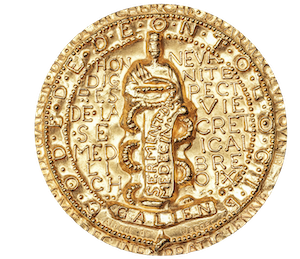
The strategic shape of the corridor is therefore not a line between two points but a triangle: Central and Eastern European science, clinical capacity and industrial base; Gulf capital, deployment scale and population data; and the shared institution that connects them. Warsaw is a natural anchor for the European vertex - centrally located, scientifically serious, and already the site of convening efforts, such as the Galien Forum, designed to bring science, policy, industry and capital into the same room. Beginning the corridor in CEE turns the region's structural disadvantage into the corridor's founding advantage: the place with the most to gain becomes the place where the model is proven - on terms of co-production, not extraction.
4 The Corridor Operating Model
Most international innovation initiatives fail in a predictable way. They generate relationships - conferences, study visits, pitch days, letters of intent, broad institutional partnerships - and relationships are mistaken for adoption. Relationships are necessary and almost never sufficient. A corridor that matters must be built around adoption from the outset, which means it must possess, as designed components rather than aspirations, a defined set of priority sectors, a mechanism for selecting projects, access to clinical pilots, a regulatory pathway, capital, implementation partners, a procurement route, and accountability for the result.
The qualification framework is the core institution
The single most important component of the corridor is not a fund. It is a shared mechanism for qualifying projects. Capital without disciplined selection finances fashionable narratives; science without deployment criteria produces work that is academically valuable but operationally unready. What is required is a common Innovation Qualification Framework that assesses every candidate project simultaneously against seven dimensions, and admits only those that clear a threshold on all of them:
Scientific quality - the strength and reproducibility of the underlying evidence.
Clinical value - the size and clarity of the improvement in patient outcomes.
Technological readiness - maturity measured on an explicit readiness scale, not by promise.
Regulatory feasibility - the existence of a credible, mapped path to authorisation.
Economic potential - a defensible model of value and reimbursement.
Deployment readiness - a realistic route into a health system, with an identified first adopter.
Strategic relevance - alignment with a declared regional priority in Europe or the Gulf.
A framework of this kind is not bureaucratic overhead. It is the instrument that lets capital and clinical access be committed with confidence, because both sides are underwriting the same, transparently scored pipeline. It is also the corridor's most transferable asset: once trusted, a shared qualification standard becomes the currency in which European science and Gulf capital transact.
Procurement matters more than another grant
For most health innovations, the binding constraint is not the next grant. It is the first serious customer. The most valuable thing the corridor can offer a qualified company is therefore not additional non-dilutive funding but a credible path to a first deployment inside a health system. Europe has spent two decades developing exactly the instruments this requires - pre-commercial procurement and public procurement of innovative solutions, in which the public buyer deliberately acts as launch customer and first adopter for a solution not yet available at scale - and has consistently under-used them.18 The Gulf's centralised, well-capitalised health systems are, in principle, able to act as the intelligent first customer that European systems struggle to be.
The corridor should build this capability in explicitly, offering qualified projects a menu of demand-side instruments: pre-commercial procurement, challenge-based procurement, outcome-based contracts, regulatory sandboxes, and controlled clinical deployment. A validated technology with a signed pathway to its first national deployment is worth more, and is more likely to reach scale, than the same technology with another round of early funding and no customer.
5 Priority Sectors
'Healthcare innovation' is too broad a category to organise a corridor around. A programme that tries to do everything qualifies nothing. The corridor should begin in a small number of sectors that satisfy five conditions at once: strong European competence, a strategic Gulf need, a feasible pilot environment, real demand, and a measurable result. Where those five overlap, the probability of genuine deployment is high; where they do not, the initiative reverts to dialogue.
The Gulf's own investments already reveal where the overlap is densest. National genome programmes across the UAE, Qatar and Saudi Arabia have made precision medicine a declared strategic priority, backed by population-scale data that Europe cannot easily assemble.19 The GCC digital-health market is forecast to grow from about USD 6.3 billion in 2025 to nearly USD 24 billion by 2035, a signal of sustained demand for AI-enabled and digital tools.20
Where to begin
| Sector | Why it qualifies |
|---|---|
| Precision medicine | Direct fit with Gulf genome programmes; European strength in target discovery and validation meets the region's population-scale reference data. |
| AI-enabled diagnostics | Fast-growing regional demand and centralised imaging estates make controlled clinical deployment and validation unusually feasible. |
| Rare diseases | High regional prevalence linked to consanguinity; genome data enables population-wide penetrance estimation and novel discovery. |
| Oncology | A declared national priority across the Gulf, including the region's first personalised oncology programmes; deep European clinical and translational base. |
| Digital therapeutics | Scalable, software-based, and well matched to centralised systems willing to reimburse on outcomes. |
| Hospital automation | New-build hospital capacity in the Gulf allows automation to be designed in rather than retrofitted. |
| Preventive and predictive health | Aligns with the Gulf's explicit shift from curative to preventive, value-based care. |
| Biomanufacturing | Meets the sovereignty objective of producing critical medicines and biologics regionally rather than importing them. |
| Clinical-trial infrastructure | Combines European trial expertise with the Gulf's centralised populations and speed to build a genuinely competitive trials capability. |
The list is a starting point, not a manifesto. The discipline that matters is the selection test itself: a sector earns a place only where European capability and Gulf need genuinely coincide with a feasible pilot and a measurable outcome. Two or three of these, executed to real deployment, would establish the corridor more convincingly than nine pursued as themes.
6 Data, Sovereignty and Strategic Infrastructure
Two forces will determine whether the corridor becomes strategic infrastructure or remains a logistics channel: how it treats health data, and how seriously it takes technological sovereignty. These are not peripheral compliance questions. They are the difference between building a pipe and building an asset.
Health data as the corridor's strategic asset
In the coming decade, advantage in medicine will accrue not only to those with the best hospitals but to those who can convert clinical data into research, validated AI models, precision medicine, population health and drug development. On this measure the Gulf holds a genuinely scarce asset. The Emirati Genome Programme has sequenced hundreds of thousands of citizens and surfaced more than five million novel variants;21 Qatar Foundation has sequenced more than 45,000 genomes and is driving costs down aggressively.22 Population-scale, consented, well-governed genomic and clinical data of this kind is exactly what European model developers and drug programmes most lack.
For that asset to be usable inside the corridor without being surrendered, the corridor needs a shared and explicit data compact governing access, anonymisation, interoperability, cybersecurity, ownership of the models and results derived from the data, and the terms of cross-border research collaboration. The principle should be that data enables collaboration without leaving the sovereignty of its origin, and that the value created from it - the trained model, the validated biomarker, the co-owned platform - is shared by agreement rather than captured by whichever party holds the compute. Without such a compact, the data cannot safely be used and the corridor's single most differentiated asset stays locked.
Sovereignty as a design constraint, not autarky
Technological sovereignty is frequently caricatured as a demand for self-sufficiency. That is not the argument. The argument is that no health system should allow its critical functions - cloud infrastructure, AI models, data, diagnostic systems, medicine production, medical devices - to depend on a handful of global suppliers over whom it has no leverage. Concentration is the risk; diversification is the remedy.
This reframes the corridor as more than a commercial arrangement. Europe's own strategic response to the Draghi diagnosis - instruments such as the Scaleup Europe Fund, explicitly designed as a strategic-autonomy tool to keep critical technologies anchored on the continent - shows that Europe now reads the loss of scale as a sovereignty problem, not merely a financing one.23 A Europe-Gulf corridor can serve the same objective for both parties by building alternative, more diversified technology and production chains: European science and Gulf capital combining to create supply that neither is forced to import on someone else's terms. That is the deeper logic of co-production - it is simultaneously an economic model and a resilience strategy.
7 The Regulatory Pathway
A corridor that cannot move a technology through regulatory approval quickly is not a corridor; it is a waiting room. The good news is that the speed advantage on the Gulf side is not aspirational. It is already built into the regulatory architecture, and it is one of the strongest, least appreciated reasons the corridor can work.
Reliance turns a European approval into Gulf market speed
Gulf regulators have deliberately built reliance pathways that convert an existing European or American approval into rapid regional authorisation. Saudi Arabia's SFDA - which operates to standards comparable to the FDA and EMA - runs a 'verification' review for products already approved by multiple reference agencies, with a targeted review timeline of 30 working days, and an 'abridged' review, targeted at 60 working days, for those approved by at least one; the UAE's MOHAP operates priority reviews.24 The practical consequence is striking: a therapy carrying EMA approval can reach Gulf markets months, and in some cases years, ahead of the point at which it would clear European reimbursement. Europe's austerity-driven, slow-reimbursement environment is a large part of what pushes innovation out of the continent; the Gulf's reliance-plus-capital model is structured to pull it in.
The regional architecture compounds the advantage. Under the GCC Health Council's central registration procedure, a single application and review can be recognised for placement across all six member states - Saudi Arabia, the UAE, Kuwait, Qatar, Bahrain and Oman.25 For a company emerging from European science, the sequence is therefore unusually clean: an EMA approval becomes the reference that unlocks an SFDA verification review, which in turn opens a path to six national markets. Compared with the fragmented, country-by-country reimbursement grind that follows approval inside the European Union, this is a materially faster route to real deployment.
What the corridor must build
This advantage is latent, not automatic. Capturing it requires the operator to hold a genuine regulatory-navigation function as a core capability rather than an outsourced afterthought. That function maps, for each qualified project, the fastest compliant route from European approval to Gulf deployment, and manages the concrete requirements that trip up newcomers: Arabic-language labelling and pharmacovigilance, the local-agent requirement, and reliance on recognised inspectorates to waive or streamline GMP inspection. For the digital therapeutics, AI diagnostics and other software-based technologies where no settled pathway yet exists, the operator should negotiate regulatory sandboxes that allow controlled clinical deployment under supervision while a permanent framework is developed.
One caveat must be stated plainly, because it connects back to the operating model. Reliance accelerates marketing authorisation; it does not by itself guarantee reimbursement or purchase. Authorisation gets a product onto the market, but a first paying customer still has to be secured. That is exactly why the procurement instruments described earlier - pre-commercial procurement, outcome-based contracts, controlled deployment - sit alongside the regulatory pathway rather than being replaced by it. Approval and procurement are two locks on the same door, and the corridor must carry the key to both. A mapped, repeatable regulatory route, held by the operator and reused across projects, becomes over time one of the corridor's most valuable pieces of institutional intellectual property.
8 Governance and Capital Structure
A corridor requires an accountable institution, not a loose coalition. Without a dedicated operator, the initiative fragments into the separate interests of ministries, funds, universities, hospitals and companies, each rational in isolation and collectively incapable of carrying a project to scale. The lesson of every stalled innovation partnership is the same: shared ambition with no single owner produces shared inaction.
The operator
The corridor should be run by an independent public-private platform, operating under the patronage of governmental institutions on both sides but with genuine operational autonomy. Its mandate is concrete and its accountability is for outcomes, not activity. It runs the qualification framework and selection; it coordinates partners across the two regions; it prepares projects for deployment; it manages the pipeline; it measures results against defined targets; and it exists specifically to remove the regulatory and organisational barriers that individual companies cannot move on their own.
This is not a theoretical governance model. It is the one the Gulf is already converging on. Qatar has publicly identified public-private partnership as the mechanism for its next phase of healthcare innovation, bringing national strategy, private capital and global expertise into a single structure.26 Abu Dhabi's M42 - a joint venture of G42 Healthcare and Mubadala Health - is a working example of a state-backed, operationally autonomous health platform that can move at commercial speed and acquire internationally.27 The corridor's operator should be built in the same spirit: sovereign in backing, independent in execution.
The capital
The capital to fund the corridor already exists on the Gulf side at a scale that dwarfs the requirement. Mubadala alone deployed USD 29.2 billion in 2024 as the world's most active sovereign investor, with health among its priorities; five GCC funds together invested USD 82 billion that year;28 Saudi Arabia's Public Investment Fund manages roughly USD 930 billion and targets SAR 10 trillion by 2030.29 On the European side, a tier of well-capitalised specialist funds now exists that did not a decade ago - Forbion, Sofinnova, EQT Life Sciences and Jeito among them - precisely at the late and growth stages.30 The problem was never the absolute quantity of capital. It was the absence of a shared, de-risked pipeline for that capital to fund with confidence. The qualification framework and the operator, together, are what convert available capital into deployable capital.
A workable structure pairs a blended-finance vehicle - sovereign and institutional capital on the Gulf side, specialist venture and growth capital on the European side, with public co-investment where strategic priorities justify it - with the demand-side procurement instruments described earlier. Capital finances the pipeline; procurement guarantees it a first customer. Neither alone closes the missing middle; together they do.
9 Pilot Implementation: The First 24 Months
Credibility is established by deployment, not by announcement. The corridor should therefore be launched not as a full programme but as a deliberately narrow pilot, designed to produce a small number of real clinical deployments within twenty-four months. The objective of the pilot is not scale. It is proof: proof that the qualification framework selects well, that the procurement pathway delivers a first customer, and that the operator can carry a project across the missing middle.
A sequenced first phase
Months 0-6 · Establish the operator and the framework. Stand up the public-private operator, ratify the Innovation Qualification Framework, and secure written commitments from two or three Gulf health systems to act as pilot deployment sites and first customers.
Months 3-9 · Select two priority sectors. Choose two sectors where the five-part test is clearly satisfied - precision medicine and AI-enabled diagnostics are the strongest candidates given existing Gulf genome and imaging assets - and open a qualified call for projects.
Months 6-12 · Qualify and capitalise the first cohort. Run six to ten European projects through the framework, admit those that clear every dimension, and match them to blended capital and to a named deployment site.
Months 9-18 · Run controlled clinical pilots. Deploy the qualified cohort in real clinical settings under pre-commercial or challenge-based procurement, with a regulatory sandbox where required and outcome metrics fixed in advance.
Months 18-24 · Convert pilots into procurement and co-production. Move successful pilots into outcome-based contracts, and structure at least one project as genuine co-production - a joint venture, licensing-plus-local-development, or regional manufacturing agreement - so the corridor demonstrates co-ownership, not only market access.
The measure of the pilot is not how many companies pass through it but how many cross the middle. A corridor that carries even two validated technologies from European science to Gulf deployment, with intellectual property co-owned and outcomes measured, will have proven more than a decade of forums. That proof is what justifies scaling the model into a permanent institution.
10 Measuring What Matters
Most innovation programmes measure themselves by their own activity: events held, startups engaged, memoranda signed, meetings convened. These metrics are seductive because they are easy to produce and always point upward. They are also almost worthless, because none of them measures whether a single patient was treated differently. A corridor serious about adoption must be willing to be judged by adoption.
Vanity metrics versus corridor metrics
| Conventional (activity) metrics | Corridor (outcome) metrics |
|---|---|
| Number of events and forums | Number of clinical deployments achieved |
| Number of startups engaged | Time from qualification to first pilot |
| Number of MoUs signed | Number of procurement contracts executed |
| Number of meetings convened | Value of follow-on investment mobilised |
| Attendance and reach figures | Number of joint clinical studies initiated |
| Press coverage generated | Technologies produced or manufactured locally |
| Value of jointly-owned intellectual property created | |
| Measured impact on patient and treatment outcomes |
The right-hand column is harder to produce and harder to inflate, which is exactly why it is the right column. Two figures deserve particular weight. The first is time from qualification to first pilot: the missing middle is, in the end, a problem of speed as much as of money, and a corridor that cannot compress this interval has not solved the problem it exists to solve. The second is the value of jointly-owned intellectual property created, because it is the single cleanest test of whether the corridor is producing co-ownership or merely market access. If that number stays near zero, the corridor is a sales channel wearing the language of partnership.
11 Risk and Failure Modes
A proposal that names only its opportunities and none of its risks is a brochure, not a strategy. The corridor can fail, and it is worth being explicit about how, because most of the failure modes are foreseeable and each has a corresponding design response. Naming them is not a hedge; it is the difference between a mechanism built to survive contact with reality and one built to survive a first meeting.
The principal risks
Dependency and capture. If the corridor is allowed to drift back into a vendor-buyer relationship, it produces the very asymmetry it was meant to dissolve: the Gulf becomes structurally dependent on imported technology and Europe becomes merely extractive. The mitigant is not a principle but a rule - co-production and co-owned intellectual property mandated in the flagship projects, so that value is created jointly rather than transferred.
Data-sovereignty friction. Health data is the corridor's most valuable and most contested asset. Cross-border movement of clinical and genomic data runs into European data-protection law on one side and national data-sovereignty regimes on the other, and a single mishandled dataset can stall the whole enterprise. The mitigant is the data compact described earlier, built on a firm principle: models and results travel, raw data does not leave its jurisdiction.
Geopolitical exposure. Health technology, AI and biomanufacturing are increasingly treated as matters of national security, which means the corridor is exposed to export controls, shifting alignments and political volatility that have nothing to do with medicine. The mitigant is diversification by design - avoiding single points of dependency in compute, data, supply and manufacturing - and anchoring the corridor in durable institutions rather than in any single bilateral relationship.
Regulatory divergence. Reliance pathways ease marketing authorisation but not reimbursement or pricing, and fragmentation persists both within the GCC and within the EU. A corridor that assumes approval equals adoption will stall at the point of purchase. The mitigant is to treat regulatory navigation and procurement as a single, jointly-managed workstream, not two sequential hopes.
Absorptive capacity and talent. Co-production is impossible without local scientific, clinical and technical capacity to co-produce with; without it, the Gulf can only buy, and CEE only exports. The mitigant is to embed knowledge transfer - joint research centres, training, exchange of clinical and regulatory expertise - into every project rather than bolting it on, so the corridor builds human capital on both sides as it runs.
Institutional drift. The operator itself can fail: it can ossify into a slow bureaucracy, or be captured by the ministries, incumbents or large firms whose interests it was created to transcend. The mitigant is genuine operational autonomy, hard accountability for outcomes rather than activity, and periodic independent review with the willingness to restructure or wind down what does not perform.
Overreach. The fastest way to qualify nothing is to attempt everything. A corridor that launches across all nine candidate sectors at once will dissipate its scarce execution capacity and prove none of them. The mitigant is the disciplined narrow start set out in the pilot: two sectors, a handful of projects, real deployments, then scale from proof.
None of these risks is disqualifying, and that is the point. Each is a known failure mode of international innovation initiatives, and each is answered by a specific feature already built into the model - the qualification framework, the data compact, mandated co-production, an autonomous operator, and a deliberately narrow pilot. A corridor designed with these failure modes in view is far more likely to become the durable institution the argument calls for than one that assumes goodwill will carry it.
12 Strategic Implications and Recommendations
Health innovation corridors are becoming instruments of alignment
Medical technology, health data, medicines, biomanufacturing and clinical AI are no longer purely commercial categories. They are increasingly treated as elements of national security and resilience. Cooperation in health technology is therefore not only economic policy; it builds long-term strategic dependencies, secures access to critical technology, strengthens the resilience of health systems, shapes regulatory influence, and creates durable relationships between states. A well-designed corridor can become a more stable axis of Europe-Gulf cooperation than any single capital investment, precisely because it is institutional rather than transactional. Capital can be withdrawn in a quarter; a shared qualification standard, a joint data compact and co-owned intellectual property are far harder to unwind.
Recommendations
For decision-makers on both sides - governments, sovereign and institutional investors, innovation agencies, academic medical centres and industry - the following are the priorities that would move the corridor from concept to institution:
Build the operator first. Establish an independent public-private platform with operational autonomy and outcome accountability before committing programme capital. The institution is the precondition, not the consequence.
Adopt a shared qualification framework. Agree a single, transparent, seven-dimension standard for admitting projects, and let it become the common currency between European science and Gulf capital.
Lead with procurement, not grants. Use the Gulf's centralised health systems as intelligent first customers through pre-commercial and outcome-based procurement, giving qualified companies the one thing they most lack: a first deployment.
Start narrow and prove deployment. Launch in two sectors with a 24-month pilot designed to produce real clinical deployments, not activity metrics.
Codify a data and sovereignty compact. Settle the terms of data access, ownership and model rights at the outset, so the Gulf's population-scale data becomes usable without being surrendered.
Insist on co-production. Structure at least one flagship project as a joint venture or regional manufacturing agreement, so the corridor demonstrably creates jointly-owned intellectual property rather than one-directional market access.
Not market access. Not startup exchange. Not innovation dialogue. A shared institutional capacity to turn science into scalable health solutions.
Europe has the science and cannot scale it. The Gulf has the capacity to scale and imports too much of the science. Neither gap is permanent, and neither region closes it alone. The corridor is the mechanism through which each supplies what the other lacks - and, done properly, it leaves behind not a series of transactions but an institution: a second pole of health innovation, co-owned across two continents, built to move discovery to deployment on terms both regions control.